5 Common Misconceptions About Shackles Debunked
Introduction
Shackles are an essential tool in various industries, including construction, marine, and agriculture. However, there are several misconceptions about shackles that continue to persist. In this blog post, we will debunk five common misconceptions about shackles to provide you with accurate information about these versatile and important tools.
Misconception 1: Shackles are all the same
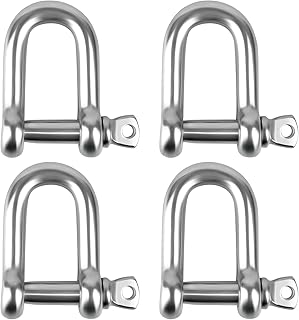
One of the most common misconceptions about shackles is that they are all the same. In reality, there are various types of shackles, each designed for specific applications. For example, bow shackles are best suited for lifting applications, while D shackles are ideal for securing loads. It is essential to choose the right shackle for the job to ensure safety and efficiency.
People Also Look For:
- FreeTec 3/4 Inch Bow Shackles D Ring Shackles, 4.75 Tons (9,500 Lbs) Heavy Duty Galvanized Lifting Shackles, 2 Pack Screw Pin D Sh...
- 6 Pack D Ring Shackle 2.0 Ton (4,000 lbs) Capacity with Screw Pin Heavy Duty Shackles for Tow Strap, Winch, Off-Road Truck Vehicle...
- WINCHMAX Swivel Recovery Eye. Stainless Steel for WInch Bumper Including 4.5 Ton ¾ Inch Shackle
- WINCHMAX 9m Kinetic Rope and 13,600kg Soft Shackle Set
- sourcing map Heavy Duty M10 Double Swivel Eye Hook, 304 Stainless Steel Ended Jaw x Jaw Chain Swivel Shackle Ring Connector Load 6...
Misconception 2: Shackles are indestructible
Another prevalent misconception is that shackles are indestructible. While shackles are designed to be durable and withstand heavy loads, they are not immune to damage. Overloading a shackle beyond its safe working load limit can cause it to fail, leading to serious accidents. Regular inspection and maintenance of shackles are crucial to ensure their longevity and safety.
Misconception 3: Shackles are only used for lifting
Many people believe that shackles are only used for lifting applications. While shackles are commonly used in lifting operations, they have various other uses as well. Shackles can be used for towing, securing cargo, and connecting rigging components. Understanding the versatility of shackles can help you make the most of these valuable tools in different situations.
Misconception 4: Shackles are one-size-fits-all
Some individuals think that shackles are one-size-fits-all and can be used interchangeably for different tasks. This is a dangerous misconception that can lead to accidents and injuries. It is crucial to select the right shackle size and type based on the specific requirements of the job. Using the wrong shackle can compromise safety and result in equipment failure.
Misconception 5: Shackles are expensive
Lastly, there is a common belief that shackles are expensive and not worth the investment. While high-quality shackles may come with a higher price tag, they are a crucial component of many operations where safety is paramount. Cutting costs by using substandard shackles can have serious consequences. Investing in quality shackles is a smart decision that can prevent accidents and ensure smooth operations.