Exploring the Most Popular Shackles for 2026 and Their Uses
As we look towards 2026, the demand for robust and reliable shackles continues to grow across various industries. These essential components play a crucial role in securing loads, facilitating lifting operations, and ensuring safety in numerous applications. This article delves into the most popular shackles anticipated for 2026 and their specific uses in different sectors.
Types of Shackles
Shackles are available in several types, each designed for unique applications. The most common types include bow shackles, D shackles, and screw pin shackles. Bow shackles are known for their versatility, allowing for multiple attachment points and making them ideal for lifting operations involving more substantial loads. D shackles, on the other hand, offer a more streamlined design that is particularly useful in situations where space is limited. Screw pin shackles provide a secure connection and are often used in high-stress environments.
Bow Shackles
Bow shackles are perhaps the most popular type of shackle in 2026. Their design features a rounded shape that enables them to handle more significant loads while distributing weight evenly. This attribute makes bow shackles particularly valuable in construction and marine applications, where heavy lifting is routine. They can accommodate various rigging configurations and are often used in lifting operations, towing, and securing loads on trailers and boats.
People Also Look For:
- 4pcs M8 M10 D Ring Screw Shackles with Screw Pin Heavy Duty 304 Stainless Steel Bow Shackle for Marine Mounting, Camping, Climbing...
- Belle Vous 10 Pack Stainless Steel M6 D Ring Screw Shackles with Pins - Heavy Duty Shackles - 5.7mm Thick and 220kg Capacity - For...
- KOHAND 6 Pcs M10 D Shackle, 3/8 Inch Stainless Steel D Shape Ring Shackle with Screw Pin Anchor, Heavy Duty Clevis Marine Shackle ...
- Tow Rope 6m20ft,10t (22,000lbs) Heavy Duty Rope with D Shackle Matching Spacer Off-Road Recovery Tow Strap High Strength Tow Ropes...
- CHENKEE Snap Swivel Shackle, 2 pcs Heavy Duty Snap Shackle Stainless Steel Swivel Eye Snap Shackle Quick Release Marine Swivel Sha...
D Shackles
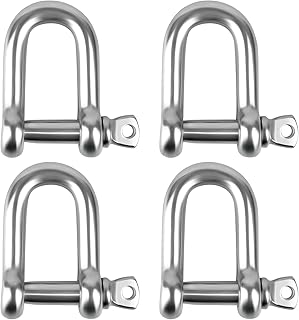
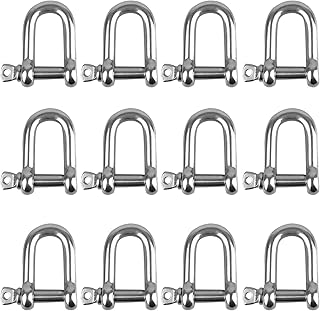
D shackles are prized for their compact design and strength. Their shape allows for a secure fit with minimal risk of slippage, making them a preferred choice for securing chains and cables. In 2026, D shackles are expected to be widely used in industries such as agriculture, where they can attach trailers to towing vehicles or secure equipment during transport. Their robustness makes them ideal for harsh outdoor environments, where reliability is paramount.
Screw Pin Shackles
Screw pin shackles are designed with a pin that screws into the shackle body, ensuring a tight and secure connection. This feature makes them particularly useful in high-stress applications, such as lifting heavy machinery or large construction materials. In 2026, these shackles are anticipated to be prevalent in the shipping and logistics sectors, where secure load management is critical. The ability to easily remove and replace the pin also adds to their versatility, allowing for quick adjustments during operations.
Uses in the Marine Industry
The marine industry heavily relies on shackles for various applications, from securing sails to connecting mooring lines. Bow shackles are particularly favoured for their ability to handle dynamic loads, such as those experienced during sailing or docking. In 2026, innovations in materials are expected to enhance the performance of marine shackles, with an emphasis on corrosion resistance and durability in saltwater environments. Additionally, the integration of smart technology into shackles may provide real-time load monitoring, allowing for enhanced safety and efficiency during marine operations.
Applications in Construction
In construction, shackles are indispensable for lifting and securing heavy materials. Bow and screw pin shackles are commonly utilised for hoisting steel beams and other significant components. The trend in 2026 is towards the use of lightweight yet robust materials that do not compromise on strength. This shift is expected to improve ease of handling while maintaining the integrity of lifting operations. Moreover, the focus on safety regulations will likely lead to the adoption of shackles with enhanced load indicators, providing visual confirmation of load limits.
Innovations and Trends
As we advance into 2026, innovations in shackle design and materials will shape the future of load securing methods. Manufacturers are exploring the use of composite materials that offer high strength-to-weight ratios, reducing the physical burden on operators while maintaining structural integrity. Sustainability is also becoming a focal point, with an increasing number of companies seeking eco-friendly materials for shackles. This trend reflects a broader commitment to environmental responsibility within the industrial sector.