Essential Shackles Every Beginner Should Know About in 2026
In the world of rigging and lifting, shackles are a fundamental component that plays a crucial role in ensuring safety and efficiency. For those starting their journey in this field in 2026, understanding the various types of shackles available is essential. This knowledge not only enhances operational safety but also contributes to better performance in various applications.
Types of Shackles
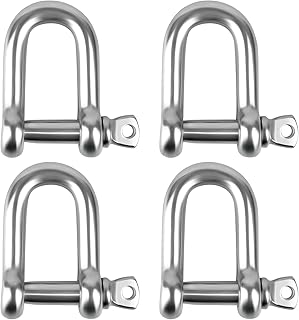
Shackles come in several types, each designed for specific purposes. The most common types include bow shackles, pin shackles, and snap shackles. Bow shackles are widely used due to their versatility. Their design allows them to accommodate multiple connections, which makes them ideal for lifting and rigging applications. Pin shackles, on the other hand, feature a straight pin that secures the load, making them suitable for applications where a more secure connection is necessary.
Snap shackles are another essential type, characterised by their spring-loaded mechanism that allows for quick and easy connection and disconnection. These are particularly useful in scenarios where time is of the essence, such as in sailing or rescue operations. Understanding the differences between these shackles is vital for any beginner looking to make informed choices when selecting the right equipment for their tasks.
People Also Look For:
- Stainless Steel D Shackle A4 316 Marine Grade - Other Sizes/Quantities Available - (M4, 4)
- Quick Link, Ekunbuy 304 Stainless Steel Heavy Duty Clips Chain Connector Repair Link Buckle for Swing Outdoor Camping
- Pack-of-10 M4 D Bow Ring Shackle Locks 304 Stainless Steel for Heavy Duty Rigging, Hauling, Steel Chain Link
- Nilight 2 Pack 3/4" D-Ring Shackle 4.75 Ton (9500 Lbs) Capacity with 7/8" Pin Heavy Duty Off Road Recovery Shackle with Isolators ...
- Pack-of-10 M4 D Ring Shackle Locks 304 Stainless Steel for Heavy Duty Rigging, Hauling, Steel Chain Link
Material Considerations
The material from which a shackle is made significantly impacts its strength and durability. In 2026, beginners should be aware that shackles are commonly made from steel, stainless steel, or aluminium. Steel shackles are the strongest option and are often used in heavy lifting applications. However, they can be susceptible to corrosion if not properly maintained. Stainless steel shackles offer a good balance between strength and resistance to corrosion, making them suitable for outdoor and marine applications where exposure to the elements is a concern.
Aluminium shackles are lightweight and resistant to corrosion, making them an excellent choice for applications where weight is a critical factor. However, they do not offer the same level of strength as steel or stainless steel options. Beginners should assess the specific requirements of their tasks to determine the most suitable material for their shackles.
Load Ratings and Safety Factors
Understanding load ratings is crucial for any beginner using shackles. Each shackle will have a specified load rating, which indicates the maximum weight it can safely handle. In 2026, it is imperative that users pay close attention to these ratings to avoid overloading, which can lead to catastrophic failures. It is also essential to consider the safety factor, which is a measure of how much load a shackle can handle beyond its rated capacity. A common safety factor is typically between five to one and six to one, meaning a shackle rated for one tonne should ideally be used for loads no greater than 200 to 250 kilograms.
Inspection and Maintenance
Regular inspection and maintenance of shackles are vital practices for ensuring safety and longevity. Beginners should develop a habit of examining their shackles for any signs of wear, deformation, or corrosion before each use. In 2026, it is recommended that users keep a detailed log of inspections and maintenance activities. This documentation not only helps in tracking the condition of the equipment but also serves as a reference for future checks.
Proper storage is also crucial for maintaining the integrity of shackles. They should be stored in a dry, clean environment to prevent rust and other forms of damage. By taking these proactive measures, beginners can ensure their shackles remain in optimal condition, ready for use whenever needed.
Choosing the Right Shackle for Your Application
Selecting the right shackle involves considering various factors such as the type of lifting being performed, environmental conditions, and the specific requirements of the load. In 2026, beginners should consult with experienced professionals or refer to industry guidelines to make informed decisions regarding their shackles. It is also beneficial to participate in training sessions or workshops that provide practical insights into selecting and using shackles effectively.